Injury-Proofing · guide
Morning Heel Pain: A Load Guide for Runners
First-step heel pain often reflects an irritated plantar fascia, but a safe return begins with uncertainty, load control, and clear red flags.
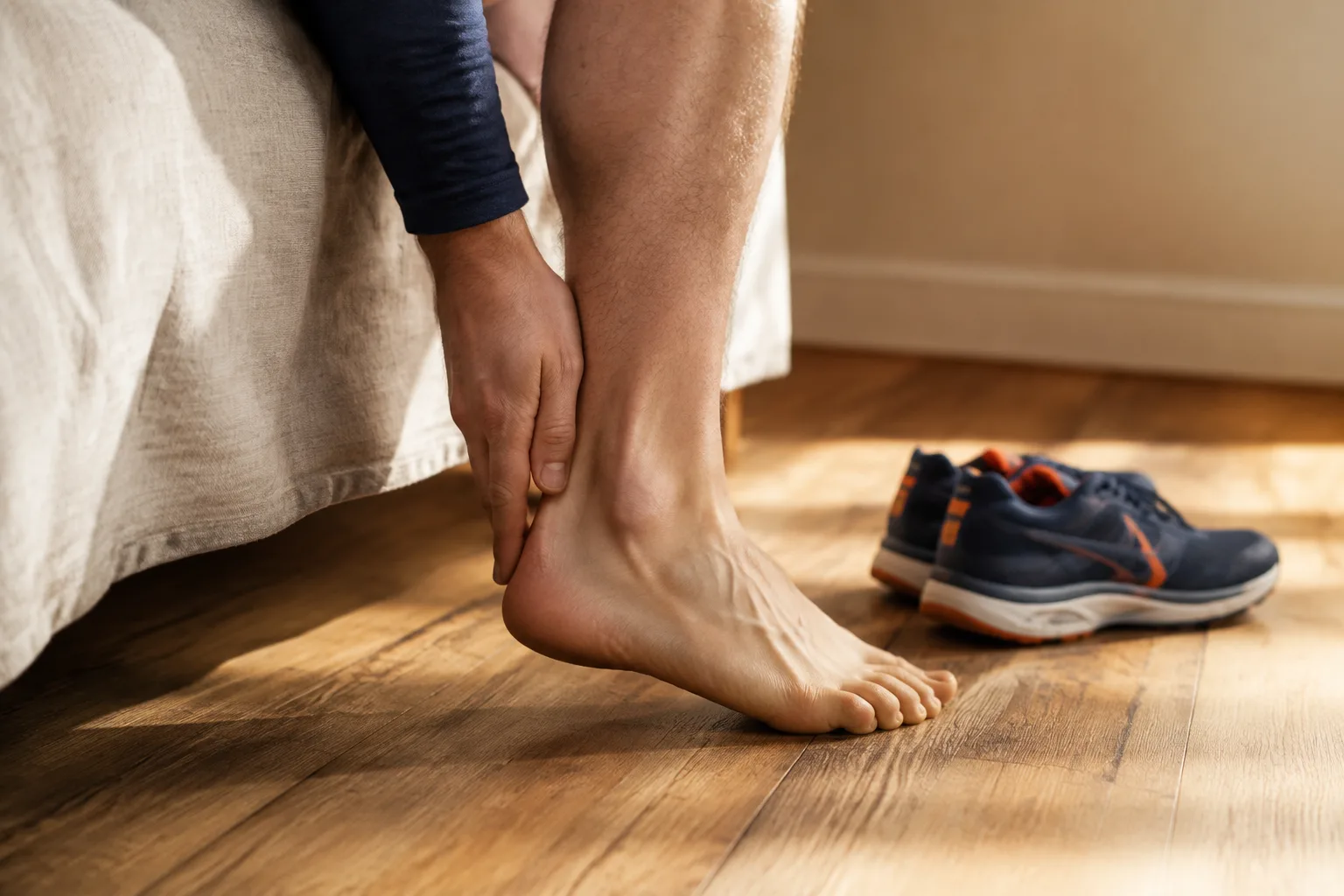
The first step out of bed can be the worst one. The heel loosens after a few minutes, then aches again after a run or a long day standing. That pattern is common in plantar heel pain, but it is not a diagnosis by itself.
The mistake is treating morning pain as an isolated foot problem while the same running load continues unchanged.
Medical disclaimer: Heel pain can arise from the plantar fascia, bone, nerve, fat pad, tendon, or another condition. This guide cannot identify the cause or replace an examination.
Track the first step
Give morning discomfort a simple 0–10 score for seven days. Also record the previous day’s running duration, faster work, hills, and time on your feet.
The number is not a medical test. It is a consistent load-response marker. If the morning score keeps rising, the current combination of running and daily activity is exceeding capacity.
Reduce peaks without removing all movement
Temporarily reduce the clearest aggravators: long runs, speed, barefoot walking on hard floors, and sudden mileage changes. Supportive shoes may improve comfort for some runners, but no shoe can substitute for load management.
If normal walking is comfortable, maintain fitness with cycling or pool running. Easy running may remain possible when discomfort stays mild, gait remains normal, and the next morning does not worsen. When that rule fails, reduce or pause impact.
Restore calf and foot capacity
Begin with tolerable calf raises and progress toward slow, loaded single-leg work. Add a controlled toe-flexion or short-foot exercise if it can be performed without symptom escalation. Calf flexibility may matter, but aggressive stretching into sharp heel pain is not the goal.
A simple starting dose is 3 sets of 8–12 two-leg calf raises every other day. Progress to single-leg or added load only when the current dose is well tolerated.
Rolling the sole on a ball can temporarily change sensation. It is optional, not the foundation of recovery.
When to stop running
Stop running when pain becomes sharp, alters push-off, rises during the session, or produces a clear next-morning increase. End the run if ordinary walking becomes painful. Resume with run-walk intervals only after daily activity is stable.
Red flags
Seek medical care for focal bone tenderness, swelling or bruising after a sudden event, numbness or burning, inability to bear weight, pain at rest or at night, fever, or rapidly worsening symptoms. These red flags require more than a self-directed plantar-fascia routine.
Also arrange an assessment when pain persists for several weeks despite a real reduction in load, or when you have risk factors for bone stress injury or systemic disease.
Return one variable at a time
Start on flat ground. Increase total easy-running time before pace or hills. Keep at least 48 hours between early return sessions and use the following morning as a checkpoint.
The goal is not a perfectly pain-free first step overnight. It is a downward trend, normal function, and steadily expanding capacity without repeated flare-ups.
Sources
- Plantar fasciitis, AAOS OrthoInfo.
- Foot and Ankle Conditioning Program, AAOS, 2025.
- Heel Pain—Plantar Fasciitis: Revision 2023, clinical practice guideline.