Recovery · guide
Alcohol and Running: Plan the Next Morning
What alcohol research can tell runners about recovery, why a hangover changes the next day's workout, and how to plan social evenings around important runs.
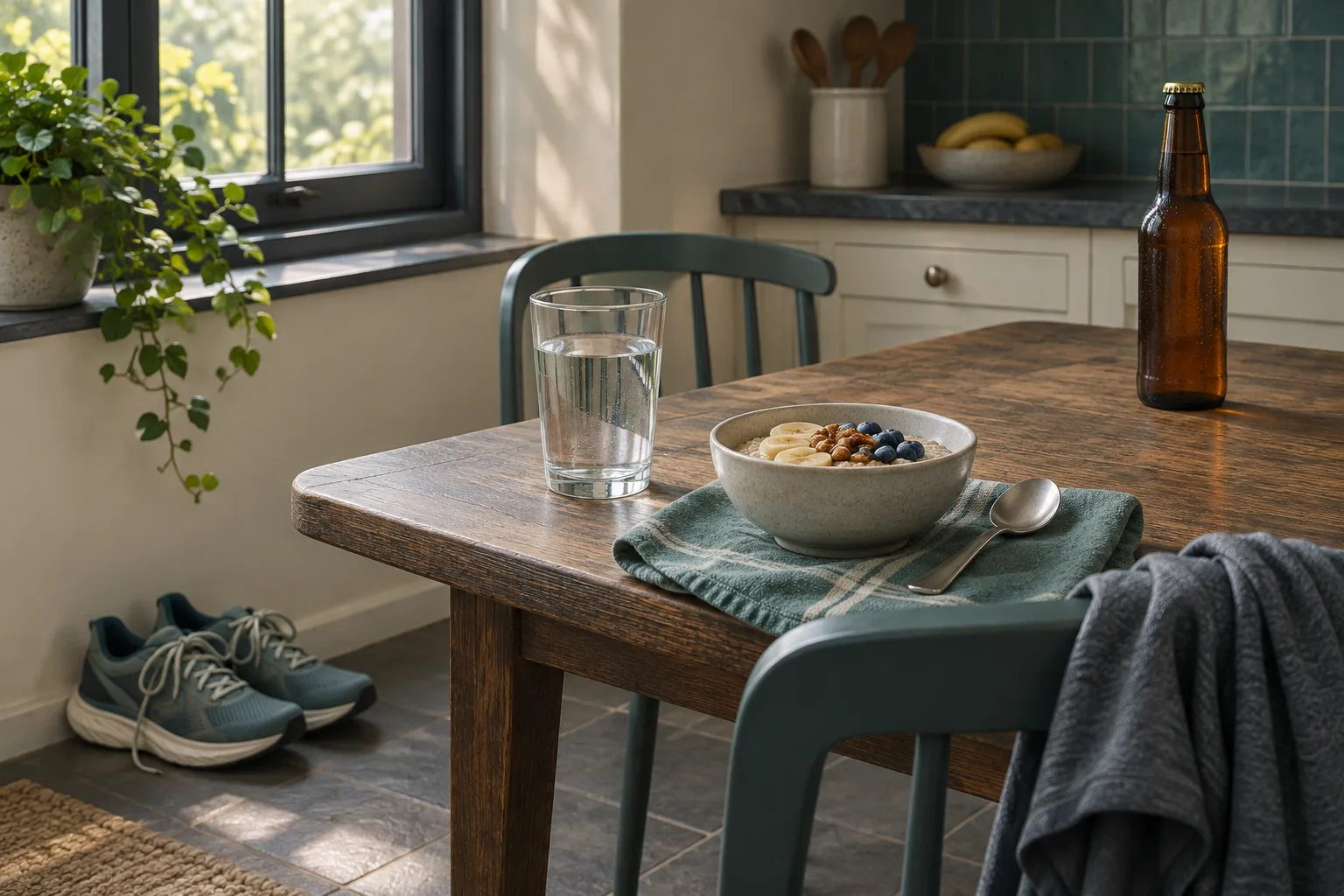
Dinner with friends runs late, and tomorrow’s long run is still on the calendar. The useful question is what you can sensibly do next morning. A drink count alone cannot answer it, and a hard run is not a hangover treatment.
For runners protecting an important workout, our editorial recommendation is to choose an alcohol-free evening beforehand. After a demanding session, make room for your usual food, fluids and sleep before planning a celebration. These are practical planning choices, not a scientifically established waiting period that makes drinking safe.
What the recovery experiment actually shows
A 2014 randomized crossover study by Parr and colleagues tested eight physically active men after combined resistance exercise and cycling. The alcohol dose was high: 1.5 grams per kilogram of body mass.
Muscle protein synthesis during the measured recovery period was 24% lower with alcohol plus protein than with protein alone. With alcohol plus carbohydrate, it was 37% lower than with protein alone. This was a short-term laboratory measure, not a marathon performance test.
The study supports concern about heavy post-exercise drinking even when protein is consumed. It does not establish how one beer affects a runner’s next race, prove the same response in women, or show that a night out erases weeks of training. Those distinctions matter when applying a striking percentage to your own routine.
Our protein guide for marathon runners covers everyday recovery eating. Protein is not an antidote to alcohol.
Why the next morning deserves a fresh decision
The National Institute on Alcohol Abuse and Alcoholism identifies disturbed sleep, stomach irritation and mild dehydration among contributors to hangovers. Attention and coordination may also be impaired. Symptoms can continue after blood alcohol has fallen to around zero; feeling less intoxicated is not the same as being ready to train.
That is enough reason to reconsider a workout without inventing a universal pace penalty. A watch’s readiness score cannot certify that you are fit to run.
Make the training decision before lacing up
The following is an editorial decision process, not a validated medical clearance tool:
- Still impaired, dizzy, nauseated or unsteady? Skip the run. Do not drive to a trailhead or group workout while impaired. Choose rest rather than trying to sweat through symptoms.
- Symptoms resolved, but sleep was poor? Reconsider the session’s purpose. Moving a demanding workout or taking a rest day is reasonable; completing every scheduled mile is not a recovery requirement.
- Feeling back to normal? That does not create a guaranteed safe interval after drinking. Consider your overall recovery and usual medical restrictions. If you choose to run, do not use it as a detox session, and stop if symptoms return.
If moving a workout would crowd two hard sessions together, omit or reduce one rather than forcing both into the remaining days. Our running-fatigue guide can help put the decision in the context of the whole week.
Plan the evening around the run that matters
For a goal race or a key long run, remove the guesswork by choosing an alcohol-free evening. At a post-race gathering, keep normal meals and rest in the plan instead of treating beer as your recovery nutrition. An alcohol-free drink is an easy social option; check the label if you need to avoid alcohol entirely.
Avoid promises such as “wait exactly 24 hours” or “drink this much water per beer.” Neither is an individual clearance rule. Coffee and electrolyte drinks do not establish readiness to train. Adjusting tomorrow’s session is more useful than adding punishment miles for tonight’s choices.
Medical disclaimer and red flags
This is general education, not diagnosis or individualized medical advice. Stop running if dizziness, vomiting or unsteadiness occurs. Seek medical care from a healthcare professional for persistent or worsening symptoms, or when you are unsure whether symptoms are related to alcohol, illness or another condition. Ask your clinician or pharmacist about medication interactions.
Confusion, inability to wake, seizures, or slow or irregular breathing after drinking are emergency red flags. NIAAA advises calling 911 immediately for suspected alcohol overdose; do not wait for every symptom or assume someone can sleep it off. Stay with the person while help is coming.
Sources
- Parr et al., PLOS ONE (2014). Primary high-dose alcohol and post-exercise muscle protein synthesis experiment; small male sample and mixed exercise protocol limit application to road runners.
- NIAAA — Hangovers. Symptom mechanisms, impairment and limits of purported remedies.
- NIAAA — Understanding the Dangers of Alcohol Overdose. Emergency signs and response.
Sources checked November 14, 2026. Training adjustments and social planning suggestions are editorial recommendations; no exact safe dose, clearance time or race-time effect is claimed.