Recovery · guide
The Two Hours of Sleep Your Training Cannot Replace
Sleep loss raises the cost of endurance work. Use this decision guide to protect the training adaptation, not just complete the calendar.
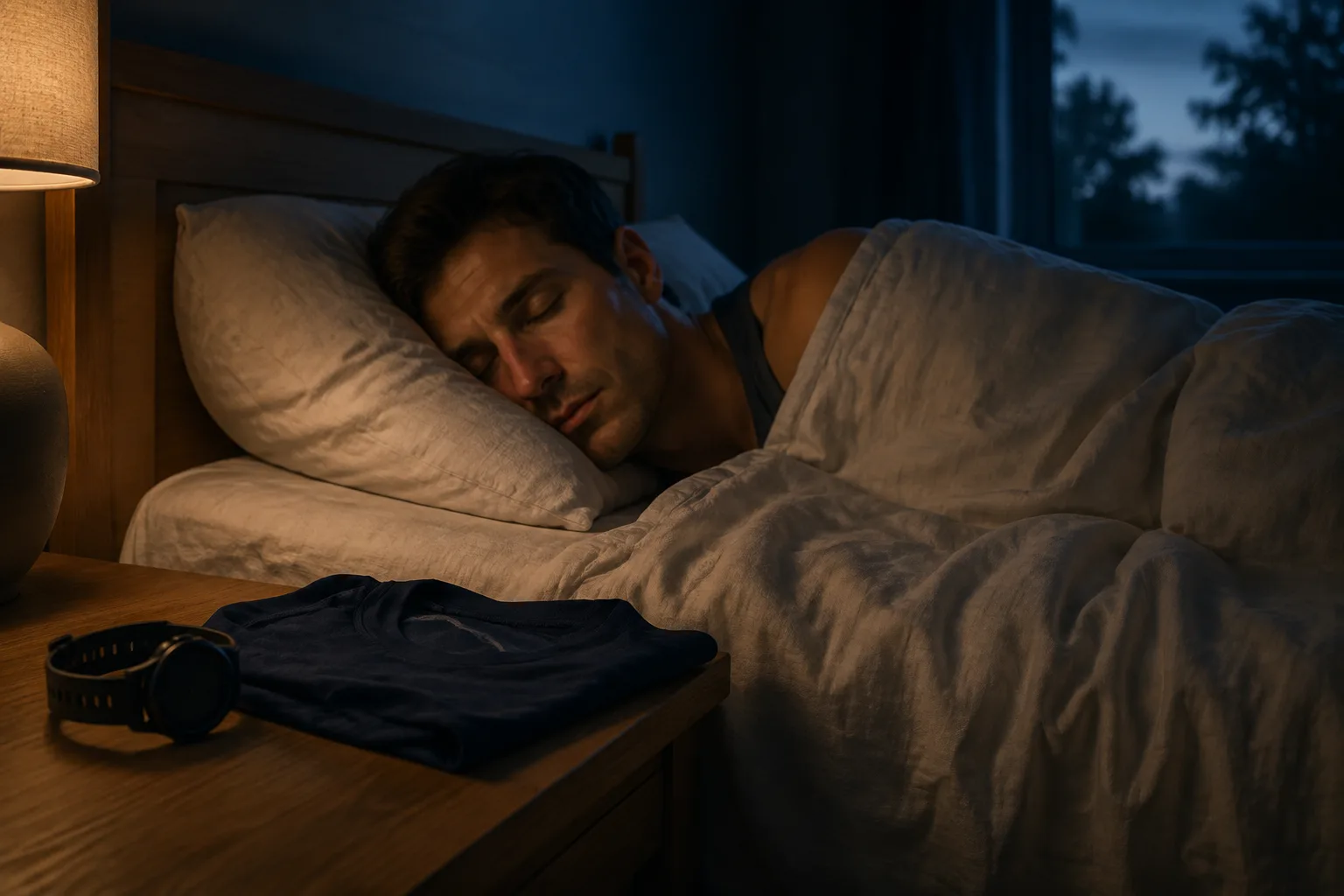
Completing a workout is not the same as absorbing it. When sleep shrinks, the planned pace may still be possible, but perceived effort, judgment, mood, and recovery margin often move in the wrong direction.
A 2023 meta-analysis found a moderate negative effect of sleep deprivation on endurance performance, with exercise lasting more than 30 minutes affected more than shorter efforts. The evidence is not a precise prediction for your next run, but it is enough to treat sleep as part of the training load.
The first loss may be judgment
Runners expect sleep loss to show up as slower pace. It may first appear as poor decisions: starting too fast, extending a session that should end, or misreading soreness as laziness.
Heart rate can remain normal while the session feels unusually difficult. A readiness score can remain green. Subjective sleepiness is still relevant evidence.
Use a morning traffic light
Green: At least roughly seven hours of sleep, normal alertness, normal mood, and no unusual soreness. Complete the planned session.
Yellow: One clearly poor night, elevated sleepiness, or easy pace feels harder than normal. Keep the run easy, reduce interval volume by 25–40%, or move the quality session one day.
Red: Several short nights, attention affected at work or while driving, illness symptoms, or multiple recovery signals moving together. Rest or use a short easy session only when it feels restorative.
The American Academy of Sleep Medicine recommends adults obtain seven or more hours regularly for health and daytime alertness. Individual need varies, and athletes may need more during demanding blocks.
Protect the next night
Five practical moves matter more than an elaborate sleep stack:
- Keep wake time reasonably consistent.
- Finish caffeine early enough that it does not delay sleep.
- Put the hardest workout after the best available night, not automatically on Tuesday.
- Reduce late alcohol; it can fragment sleep even when falling asleep feels easy.
- Use a short daytime nap when useful, but not so late that it delays nighttime sleep.
If you train before work, set a bedtime alarm as seriously as the morning alarm. The schedule that repeatedly creates five-hour nights is not a disciplined training plan.
Do not “repay” a missed workout
After a lost session, return to the normal sequence. Do not stack intervals and a long run into the weekend. Training adaptations are built across months; one skipped workout carries less risk than a compressed cluster of hard sessions.
The same logic applies to mileage. If sleep remains poor, maintain frequency with shorter easy runs rather than forcing the original volume.
Read wearables in context
Sleep staging from consumer wearables is an estimate. Total time and consistent trends may be useful, but the device cannot see your work stress or how hard the warm-up feels. Use the HRV evidence guide to keep readiness numbers in proportion.
The mature decision is not always to train. It is to preserve the next useful session.
Sources
- How much does sleep deprivation impair endurance performance?, systematic review and meta-analysis, 2023.
- Recommended amount of sleep for a healthy adult, AASM and Sleep Research Society consensus.
- Sleep and the athlete, 2021 expert consensus recommendations.
- Daytime napping and sport performance, systematic review and meta-analysis, 2023.