Training · guide
Use a 5K or 10K Test to Adjust Goal Pace—Carefully
A standardized test run can update your training paces without turning one good day into an unrealistic marathon target.
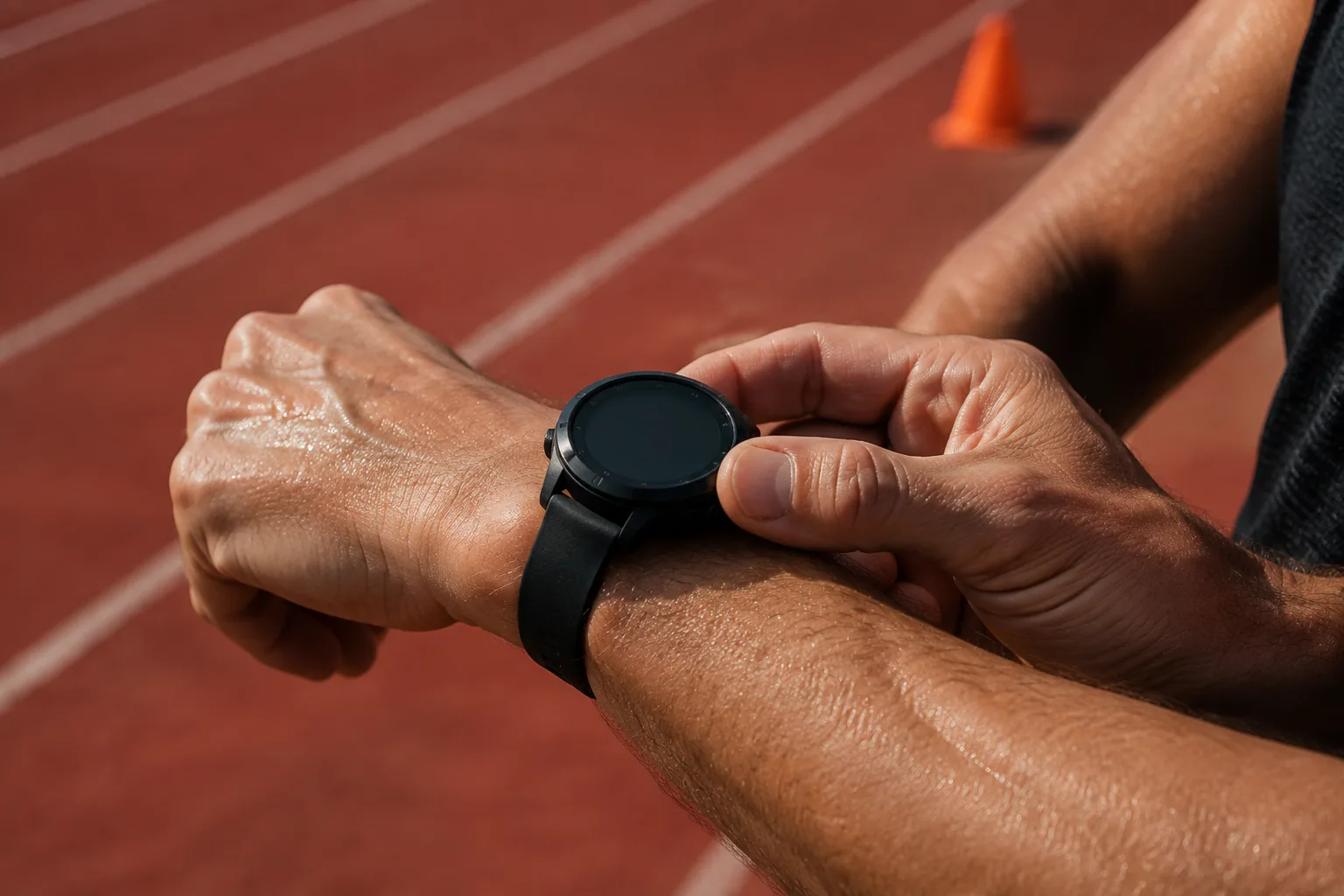
Halfway through a race build, the original goal can become either too easy or too expensive. A standardized 5K or 10K test gives you current evidence. It does not give you permission to project the result blindly across 26.2 miles (42.2 km).
Use the test to adjust training, then demand confirmation from longer, more specific work.
Choose the distance
A 5K test creates less recovery cost and works well for newer runners or crowded schedules. A 10K test gives marathoners a stronger endurance signal but needs more recovery and better pacing.
Choose the same flat loop or track you can repeat. Avoid a route with traffic stops or large elevation changes. Run at a similar time of day, and do not compare a cool 50°F (10°C) test with one at 82°F (28°C).
Standardize the setup
- Keep the previous two days easy.
- Use a familiar pre-run meal and caffeine routine.
- Warm up for 15–20 minutes, then run four short strides.
- Record weather, route, shoes, average heart rate, and perceived effort.
- Pace the first third conservatively and aim for an even or slightly faster finish.
Trained runners have shown low within-subject variation across repeated 5K time trials under controlled conditions. Real-world conditions are noisier, so interpret a small change with humility.
Make one of three decisions
Move up: The result improves clearly, the effort was well paced, and recent threshold and long-run sessions also support faster training. Adjust workout paces modestly—roughly 1–2%—before changing a marathon goal.
Hold: The result is close to expectation or conditions were imperfect. Keep the current paces and reassess after two or three weeks.
Move down: The result is materially slower in normal conditions, and several recent sessions have also missed. Reduce training paces before accumulated fatigue becomes a failed block.
One test should not dictate every pace. A fast 5K shows speed and aerobic power. Marathon performance also depends on durability, fueling, critical speed, and the fraction of that speed you can sustain.
Add a marathon-specific confirmation
Within the next 7–14 days, use a long run with a controlled race-effort segment—for example, 14–18 miles (23–29 km) with the final 4–6 miles (6–10 km) around marathon effort.
This is not a second race. The segment should remain controlled, with stable form and fueling. If the revised pace makes the final miles ragged, hold the original goal.
Research using training data from more than 25,000 recreational marathoners found that critical-speed estimates could help predict marathon performance, but the prediction error was still meaningful. Faster runners also raced at a higher fraction of critical speed. A calculator is a range, not a contract.
Avoid wish-based training
Training at the pace you hope to run can create the illusion of specificity while making every session too hard. Current fitness is the correct input. Fitness developed over the next block is the output.
If your test improves, celebrate by training a little more accurately—not by rewriting the entire season in one evening.
Sources
- Intra-subject variability of 5 km time-trial performance, 2017.
- Calculation of critical speed from raw training data in recreational marathon runners, Medicine & Science in Sports & Exercise, 2020.
- Developing negative split pacing in endurance athletes, 2026.