Gear · guide
Running Shoes for Commuting: What to Check
Choose shoes for the walk to work and an easy run home. Use a practical fitting checklist, compare one-pair tradeoffs, and account for wear beyond logged miles.
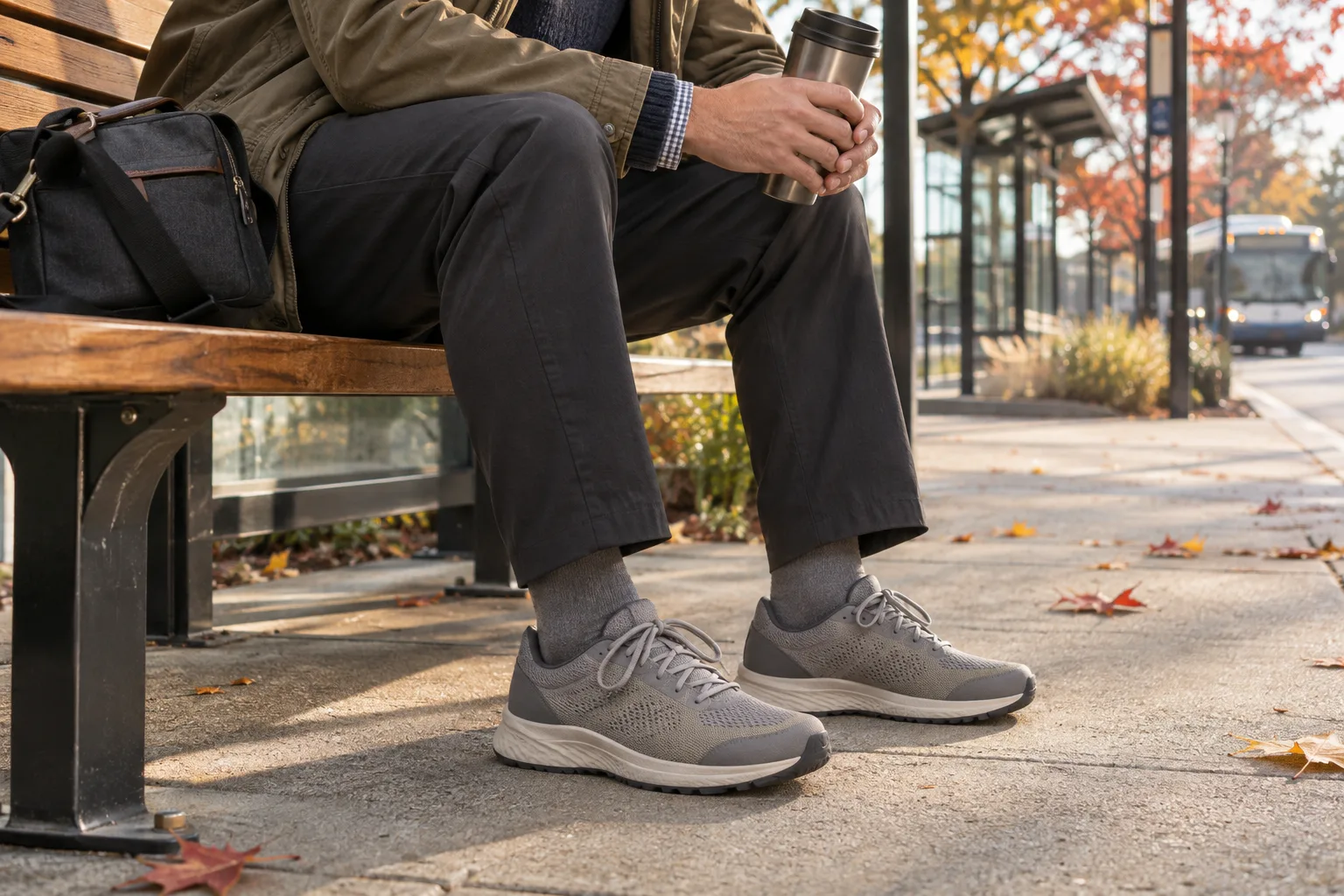
A shoe can feel right during a three-mile run and awkward during the walk to the station. If you want one pair for both, test both jobs before buying it.
This is a source-based buying guide, not a hands-on review. We have not tested the shoes in a commuting trial. The checklist below is our editorial way to apply published fitting guidance, not a ranking of models or a promise that any shoe prevents injury.
Start with the day you actually have
Write down the demands before comparing shoes: your walk to transit, time spent standing, office dress requirements, and the run you expect to do afterward. A pair for a short walk and an easy run has a different assignment from footwear for an all-day standing job.
Our editorial starting point is a running shoe you already find comfortable on easy runs, provided it also passes your walking test. If you need protective or slip-resistant footwear at work, follow those requirements; an ordinary running shoe is not a substitute.
Do not choose by softness alone. Ask whether you can walk, stand, turn, and run comfortably. There is no universal stack height, foam label, or plate configuration that answers those questions for everyone. Nor does a fast race result demonstrate that a shoe suits your workday.
Make the fitting session count
The American Orthopaedic Foot & Ankle Society’s FootCareMD guidance advises shopping after activity or late in the day, fitting the larger foot, and using your activity socks. It recommends toe room, a secure heel, and immediate comfort rather than relying on a break-in period.
Apply that advice to the combination you plan to wear. Bring your running socks, plus prescribed inserts if you use them. If office socks are different, check that combination too. A shoe that fits in thin socks may feel different after you change for the run.
Our in-store checklist:
- Walk first. Notice heel movement, toe pressure, and any feeling that you must alter your stride to accommodate the shoe.
- Stand and turn. Check whether ordinary movements feel comfortable and controlled.
- Jog where the store permits. Walking comfort is only half the assignment if you plan to run home.
- Compare both feet. Do not let the comfortable foot distract you from a cramped one.
These are shopping checks, not laboratory measures of stability or traction. A carpeted store cannot establish wet-sidewalk grip. Ask about intended use and the return policy rather than assuming an outsole pattern guarantees it.
When carrying a second pair makes sense
AAOS’s athletic-shoe guidance distinguishes footwear by activity and recommends sport-specific shoes for regular participation. That supports checking the running task explicitly; it does not establish that every runner needs separate commuting shoes.
Try one pair if both activities feel comfortable and your workplace permits it. Consider carrying or storing another pair when your work shoes cannot handle the run, your running shoes are awkward for walking, or you want a dry change after wet weather.
A carbon plate is not an automatic disqualification. Equally, owning a race shoe does not make it the default commuter. Judge the individual fit and walking experience instead of banning an entire category. Our workday running guide can help you decide whether running home is practical before you buy equipment around it.
Track wear beyond the watch
Your training log does not capture the walk to lunch or the time spent on your feet. Record roughly when you began using the pair for daily wear; inspect it alongside your running mileage. We do not offer a conversion from walking hours to running miles because this guide has no validated formula for that.
Use our shoe-replacement guide for a fuller discussion of wear. If toe pressure is already a problem, see shoe fit and black toenails. Persistent pain warrants professional assessment rather than another speculative purchase.
For a commuter, a successful purchase is a pair that handles the whole intended day. If it only works for one part, changing shoes may be the simpler solution.
Sources
- FootCareMD / American Orthopaedic Foot & Ankle Society: How Do I Pick Athletic Shoes? — fitting, socks, toe room, heel security, and walk/run checks.
- American Academy of Orthopaedic Surgeons: Athletic Shoes — activity-specific footwear guidance.
Sources checked November 2, 2026. The shopping sequence and one-pair decision framework are editorial advice. No model specifications, prices, comparative performance, or injury-prevention claims are made.