Gear · analysis
Brooks Ghost AMP: The Faster Ghost Is Really a Different Shoe
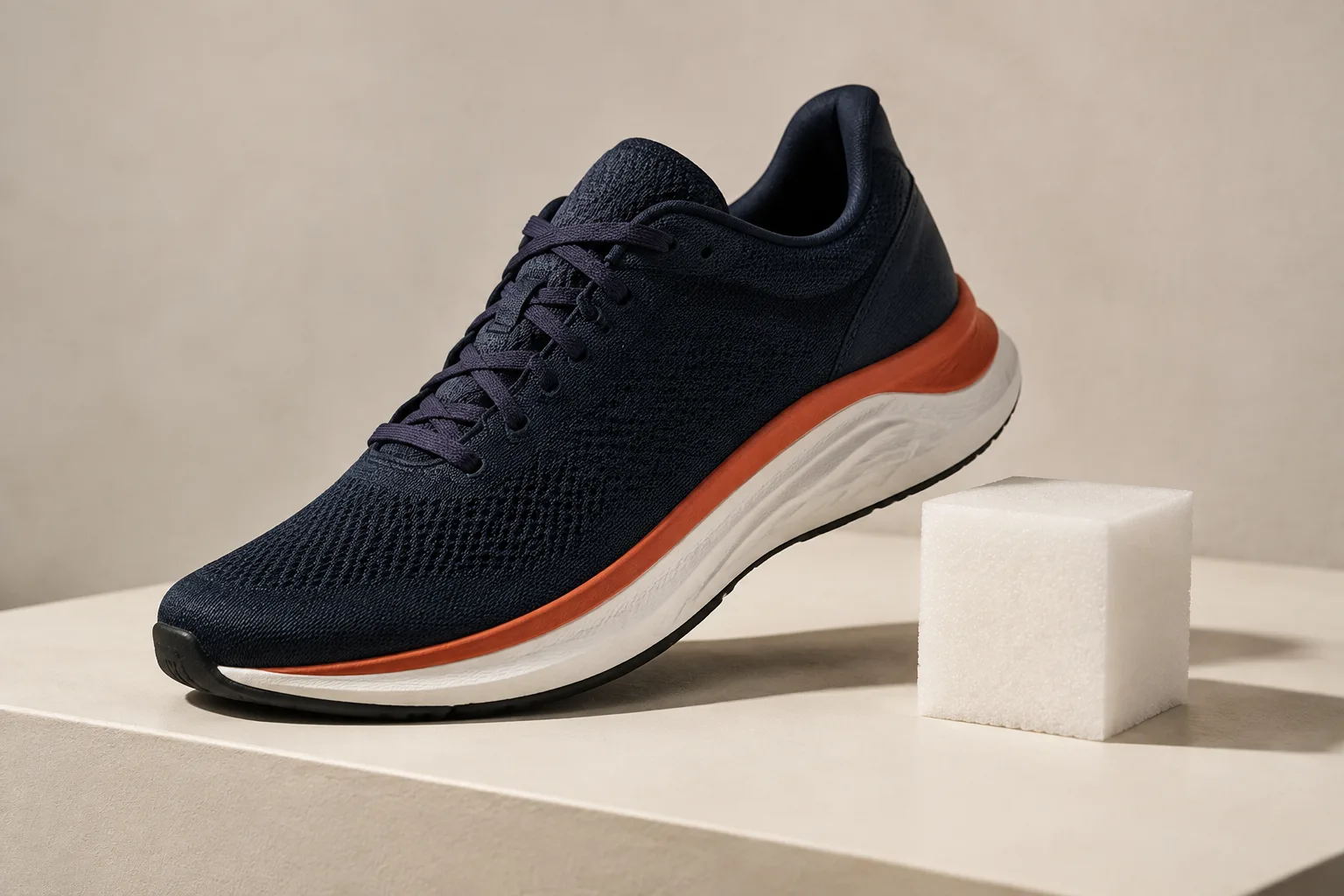
At 9 ounces with a 6 mm drop and no plate, the Ghost AMP targets runners who want speed without a rigid race-shoe feel.
Evidence note: This is a data-based buying analysis, not a hands-on review. It combines official specifications with clearly attributed external testing.
The Ghost name suggests a familiar, high-drop daily trainer. The Ghost AMP is something else: lighter, lower-drop, and built around faster daily running without a plate.
Brooks lists it at $150, 9.0 oz (255.1 g) for men, with a 6 mm drop. That places it in the crowded “one shoe for easy-to-tempo” category rather than beside the traditional Ghost.
The design argument
The key feature is SpringRamp forefoot geometry paired with responsive cushioning. Brooks describes a secure heel and dynamic forefoot intended to provide inherent stability. There is no carbon plate.
That matters for runners who dislike the stiffness or assisted roll of plated trainers. Geometry and foam can still create a directed transition, but the forefoot should retain more natural flex than a plated racing shoe.
The official use cases—daily runs, uptempo workouts, and “feeling fast”—are unusually broad. The shoe has to be comfortable enough at easy pace and responsive enough at threshold pace to justify that promise.
Who should consider it
- runners who want one primary shoe for daily mileage and weekly tempo work;
- Ghost users who want less weight and a lower drop;
- athletes who prefer an unplated forefoot;
- high-school or adult runners moving between road training and track sessions;
- runners who find tall maximal shoes disconnected.
At 9.0 oz, the AMP is light enough to be credible for workouts without becoming a minimalist shoe.
Who should pause
A 6 mm drop changes calf and Achilles demand for some runners accustomed to 10–12 mm shoes. Transition gradually rather than replacing every run at once.
Runners seeking maximum cushioning for long easy days may prefer the normal Ghost or Glycerin line. Runners seeking race-day efficiency may still prefer a plated model.
Fit also matters. The official page lists a secure, gusseted upper, but independent fit experience should be treated as individual rather than universal.
Rotation logic
In a two-shoe rotation, use the AMP for steady runs, fartlek, threshold intervals, and shorter long runs. Pair it with a more protective easy-day shoe. In a one-shoe rotation, monitor whether the firmer or more directed feel remains comfortable during recovery miles.
Compared with the Pegasus 42, the AMP is lighter on official and lab-reported men’s samples, has a lower drop, and is positioned more explicitly for uptempo running. The Pegasus offers a more traditional workhorse identity.
Buying decision
At $150, the Ghost AMP makes sense when you value one unplated shoe across multiple paces. It is less compelling if all your fast running already happens in a plated trainer or if easy comfort is the only priority.
Try it with a few faster strides in-store if possible. A shoe sold as “responsive” should feel smooth at your pace, not merely firm.
Sources
- Ghost AMP official US product page, Brooks Running.
- Brooks Ghost AMP review, Fleet Feet, external wear-test perspective.
- Brooks AMP review, Road Trail Run, multi-tester perspective.