Gear · analysis
Fast Without a Plate: The New Speed Training Shoes
Premium foam, rocker geometry, no plate: the 2026 speed-trainer market, explained with the research on what plates and foam actually do.
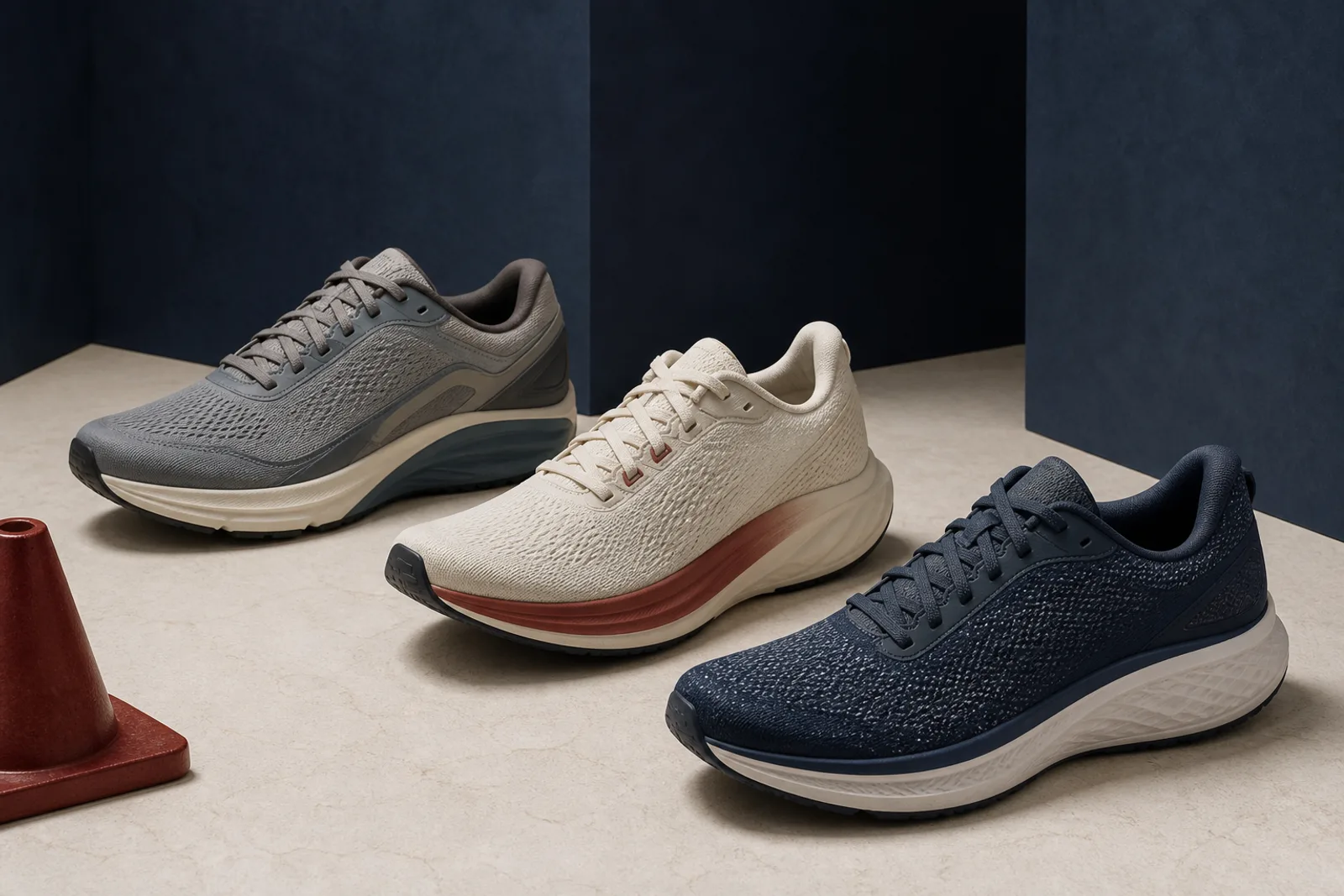
Carbon plates have not left the race course. What has changed in 2026 is the other half of the equation: the assumption that “fast” requires one. A wave of new speed-oriented training shoes delivers light weight, energetic foam, and aggressive rocker geometry—with no plate at all—and they are priced like normal trainers, not super shoes.
Disclosure: This is a data-based buying analysis built on brand-published specifications, launch pricing, and independent lab and review coverage. It is not a hands-on review. Prices are U.S. launch prices as of early September 2026 and change frequently.
The plateless speed class, at a glance
PUMA Deviate Pure NITRO ($150). PUMA’s own copy says the quiet part out loud: “no plate, just smooth propulsion.” The shoe pairs full-length NITROFOAM with a rocker shape—about 7.5 oz (213 g) in a men’s 9 with roughly 38/30 mm of stack, per brand specs and independent measurement coverage from Doctors of Running.
Nike Pegasus Plus 2 ($170). The most interesting Nike release of the fall: full-length ZoomX with an exposed forefoot Air Zoom unit—no plate—launching September 3, 2026. Nike claims noticeably higher energy return than the original Pegasus Plus; treat that as a brand lab figure, not a promise for your feet. Specs land at 38/28 mm with a 10 mm drop.
Saucony Endorphin Azura ($150). Saucony took the Endorphin Speed’s recipe and deleted the nylon plate: PWRRUN PB (PEBA) foam at 40/32 mm, 8 mm drop, SpeedRoll rocker, about 7.4 oz (240 g) in a men’s 9. The pitch is one shoe for easy days, long runs, and tempo work.
adidas Adizero EVO SL line (from $150). The EVO SL runs a full Lightstrike Pro midsole—adidas’ race foam—without a full-length plate, and the EXO edition adds an exoskeleton-style upper. Independent reviewers have been blunt that the foam at this price is remarkable.
The counterpoint: On LightSpray Cloudmonster 3 Hyper ($280). Plateless does not automatically mean cheap. On’s laceless, spray-printed upper pushed this max-cushion trainer to race-shoe money at launch—which is worth remembering whenever “no plate” gets marketed as a value proposition.
Read together, the pattern is clear: the technologies that defined super shoes—PEBA-class foams, lightweight uppers, rocker geometry—are migrating into daily trainers, while the plate itself is becoming what it always should have been: a race-day tool, not a status symbol.
What the research actually says about plates
The super shoe story is real, but narrower than marketing suggests. A 2026 systematic review and meta-analysis of crossover trials found carbon-plated shoes reduced metabolic demand by about 2 to 3 percent compared with conventional shoes, with moderate certainty for the main outcomes. That is a large effect in a sport measured in seconds.
But the mechanism is less tidy than “stiff plate = free speed.” A separate meta-analysis of longitudinal bending stiffness and midsole energy return concluded the benefits come from the interaction of stiff plates and resilient foam—not from either feature alone. And individual response varies enormously: a cluster analysis of 96 runners testing stiffer shoes found meaningfully improved economy for some, worse economy for others, and little change for many in between. The shoe that powered your training partner’s PR may simply not fit your mechanics.
No plate does not mean automatically safer
The tempting corollary—“plateless shoes are the healthy choice”—is not supported either. A 2023 case series documented navicular bone stress injuries in five highly competitive runners wearing carbon-plated shoes; it is a clinical observation, not proof of causation, but it is a fair reminder that very stiff, very springy shoes change how load travels through the foot. The practical guidance stays boring: transition to any structurally different shoe gradually, keep most of your weekly volume in a familiar trainer, and let symptoms—not marketing—drive gear decisions. Persistent or worsening foot pain deserves a conversation with a sports medicine professional.
How to choose between plated and plateless
1. What is the shoe for? Race day with an adapted body: a plated racer still makes sense. Daily miles, long runs, and the tempo session squeezed between work and dinner: a plateless speed trainer covers it with less accumulated stress.
2. Can your pace drive it? Rocker-and-foam speed trainers generally work across a wider pace range than aggressive plated racers, but any stiff, bouncy shoe rewards honest effort. Test at your actual training paces, not jogging-store strides.
3. What does your body say after an hour? Foam that feels electric for two miles can feel unstable or harsh at mile 15. Fit, arch irritation, calf soreness, and recovery quality are data. A premium spec sheet is not.
4. How many shoes do you actually need? For most runners, one well-chosen daily trainer plus one well-analyzed daily workhorse covers 90 percent of the year. Add a plated racer only when you are racing and have done key workouts in it. Reverse that order and you end up with a $250 shelf trophy.
The bottom line: race shoes will keep their plates, and they should. But if your goal is running faster most days of the week, the plateless speed class finally offers a real alternative—one where the honest comparison is foam, geometry, fit, and price, not a carbon story. Our other gear analyses, like the Pegasus 42 and GEL-KAYANO 33 breakdowns, follow the same rule: read the data, then buy for your feet.
Sources
- Metabolic effects of carbon-plated running shoes: a systematic review and meta-analysis, Frontiers in Sports and Active Living, 2026.
- The effects of running shoe longitudinal bending stiffness and midsole energy return on oxygen consumption and ankle mechanics and energetics: a systematic review and meta-analysis, 2025.
- Individual physiological responses to changes in shoe bending stiffness: a cluster analysis study on 96 runners, Scandinavian Journal of Medicine & Science in Sports, 2023.
- Bone stress injuries in runners using carbon fiber plate footwear, Sports Medicine, 2023.
- PUMA Deviate Pure NITRO product page and Doctors of Running review.
- Nike Pegasus Plus 2 product page.
- Saucony Endorphin Azura product page.
- On LightSpray Cloudmonster 3 Hyper launch release, February 2026.